
Black Business, Culture, History & News
Explore Black-owned businesses, community discoveries, society, news, history, and press releases that inform, inspire, and connect our communities. Learn About "US"
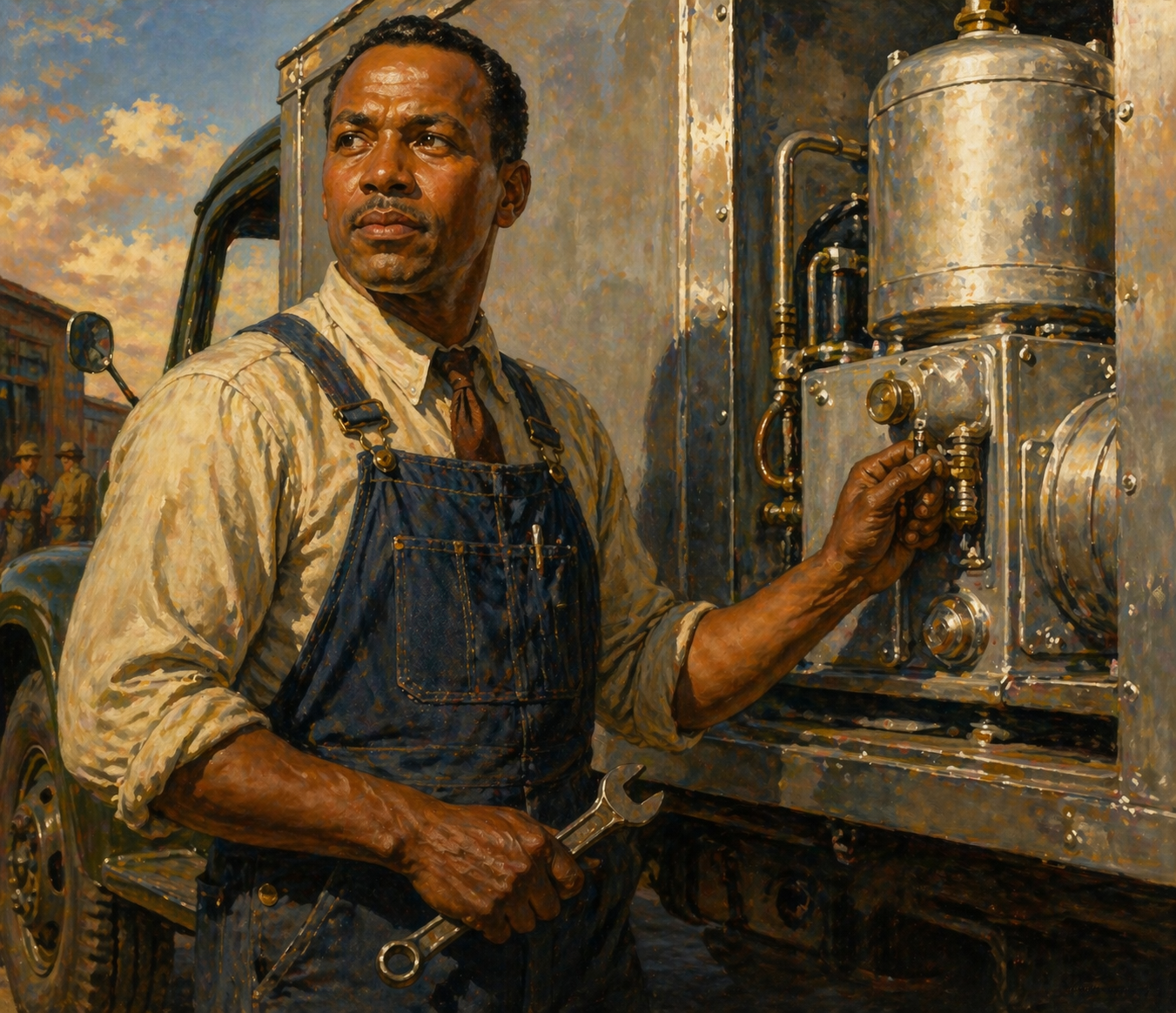
Frederick McKinley Jones: The Inventor Who Kept the World Cold
Support Black Owned Editorial Team Black History
A Truck Arrives in the Dark
It was the summer of 1944.
Somewhere in France, a soldier was losing blood fast. The field doctors had done everything they could. But they needed more. They needed a blood transfusion — and they needed it now.
Then they heard it. A rumble outside. A truck had arrived.
Inside that truck, packed in cold and ready to use, were bags of preserved blood. It had traveled hundreds of miles. Over rough roads. Through summer heat. And it arrived cold. Usable. Life-saving.
The soldier made it.
Most people never thought about how that blood stayed cold. Most people didn't know a name to thank.
But there was a name. There was one man — a self-taught mechanic with no college degree and no famous family — who figured out how to keep things cold on the move. And his story starts long before the war, in a small river town in Kentucky, where a little boy was left with almost nothing.
How did that boy grow up to change the world? That's exactly what we're about to find out.
A Boy From Covington
His name was Frederick McKinley Jones. He was born on May 17, 1893, in Covington, Kentucky — a small city just across the river from Cincinnati, Ohio.
Life was hard from the very beginning.
Frederick's mother left when he was very young. His father passed away when Frederick was just nine years old. Suddenly, he was alone. A Catholic priest named Father Edward Ryan took him in and gave him a place to stay. Father Ryan was kind. He made sure Frederick had food and shelter.
Back then, Black children in America faced walls at every turn. Many schools wouldn't let them in. Jobs turned them away. People told them their dreams were too big. Frederick grew up in a world that wasn't built for him to succeed.
But Frederick had something that couldn't be taken away. He was curious. He looked at machines — cars, engines, tools — and wanted to know how they worked. Not just what they did, but why. That curiosity would one day change history.
You can read more stories of Black inventors who overcame incredible odds right here on SupportBlackOwned.com.
The School of Getting Your Hands Dirty
Frederick left Father Ryan's care when he was still very young — around eleven or twelve years old. He was on his own.
He took whatever jobs he could find. He swept floors. He ran errands. He worked at a hotel. He did anything to keep himself fed.
But every chance he got, he found machines to look at. He asked questions. He watched how things worked. When he could find books about engines and electricity, he read them cover to cover.
Eventually, Frederick made his way to a small town called Hallock, Minnesota. There, he got a job at a garage. He fixed cars. He tinkered with engines. He built things from scratch.
Here's the thing — Frederick had no formal training. No engineering degree. No fancy tools. But he had patience. And he had a gift for solving problems that stumped everyone else.
One of his early projects was building a radio transmitter for the local sheriff's department. Can you imagine? A self-taught young man, wiring together a radio system that the whole county would depend on. It worked perfectly.
People started to notice. Frederick McKinley Jones wasn't just handy. He was gifted.
Doors That Wouldn't Open
Being talented wasn't enough. Not in America in the early 1900s.
Frederick was a Black man with no formal education and no connections. When he walked into a room, many people made up their minds about him before he ever spoke a word. It didn't matter what he could do. It mattered what they assumed about him.
He was turned away from opportunities that less skilled men received without question. He was overlooked. He was underpaid. Sometimes, the credit for his work went to others.
Frederick fought in World War I as well. He served his country bravely — and came home to a nation that still didn't treat Black men as equals. That had to sting. Deeply.
But Frederick didn't let bitterness take over. He kept building. He kept solving. He kept showing up.
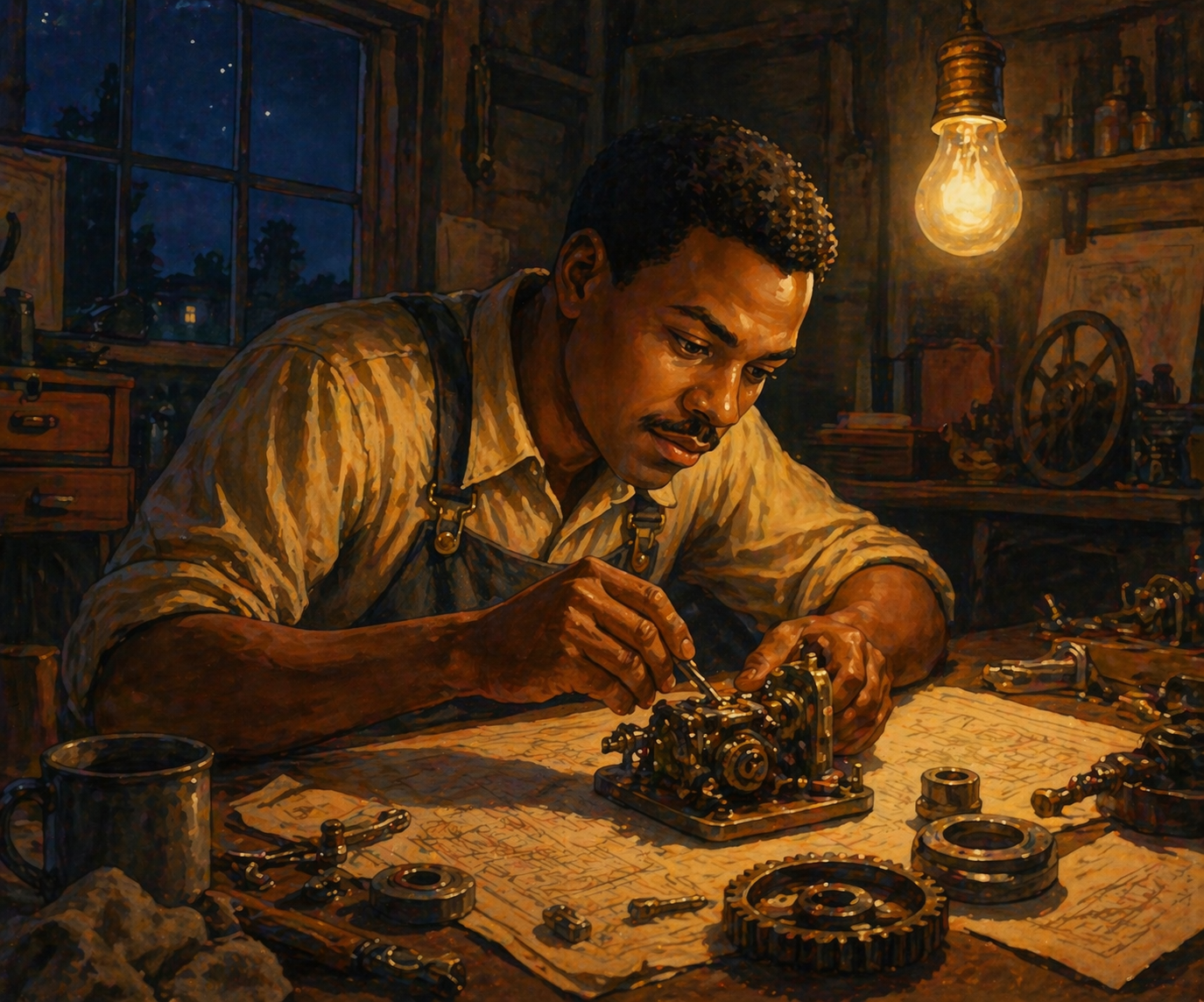
He also kept learning. He studied technical diagrams. He taught himself about refrigeration systems, movie projectors, and sound equipment. While other men rested, Frederick educated himself. Night after night. Page after page.
That kind of quiet determination is rare. And it was about to pay off in a very big way.
The Bet That Changed Everything
By the 1930s, Frederick was working for a man named Joseph Numero in Minneapolis, Minnesota. Numero ran a company that made sound equipment for movie theaters.
One hot afternoon, Numero came in from the golf course complaining. He'd made a bet with a friend. The friend claimed nobody could build a refrigeration unit small enough to fit on a truck — something that could keep food cold on long hauls across the country.
Frederick overheard the conversation.
"I can build that," he said.
Numero looked at him. He wasn't sure. It was a wild idea. Refrigeration units at the time were massive. Bulky. They needed to stay in one place. Building one small enough for a moving truck — one that could handle the bumps, the vibrations, and the heat of summer roads — seemed almost impossible.
But Frederick went to work.
He sketched. He tested. He failed. He tried again. He built a prototype in the garage, piece by piece. He had to solve problems that no engineer had ever thought about before — like how to keep a refrigeration unit running when the road shakes it apart, or how to cool air evenly inside a sealed trailer.
Remember that truck that pulled up to the field hospital — the one we opened with? This is the moment that made it possible.
In 1940, Frederick received a patent for his design. It worked. The Thermo King Model A was born — the world's first practical refrigeration unit for trucks and trailers.
Frederick and Joseph Numero founded a company called Thermo King to build and sell the units. It would become one of the most important companies in American history — though most people have never heard its name.
Think about that for a moment. A man with no formal schooling, no wealthy investors, and no powerful connections had just solved a problem that the entire engineering world had missed. He did it in a garage. He did it by thinking.
And he was just getting started.
Cold Never Felt So Warm
Think about the last time you ate fresh fruit in the middle of winter. Or a salad with vegetables grown hundreds of miles away. Or ice cream that survived a cross-country trip.
None of that was easy before Frederick McKinley Jones.
Before his invention, fresh food could only travel short distances before it spoiled. Farmers couldn't get their produce to faraway cities. Grocery stores in cold climates couldn't get tropical fruits. People in rural areas had limited choices.
Frederick's refrigerated truck units changed all of that. Overnight, food could travel thousands of miles and still arrive fresh.
And then came the war.
When World War II broke out, the United States military quickly realized what Thermo King units could do. They used them to transport blood, medicine, and food to soldiers at the front lines. Lives that would have been lost to spoiled supplies or lack of blood were saved — because a truck showed up cold.
Frederick received over 60 patents in his lifetime. He never stopped inventing. He also designed early versions of a portable X-ray machine and improvements to movie sound systems.
Can you imagine walking into a grocery store today and finding only what was grown within fifty miles? No oranges in Minnesota. No strawberries in January. No avocados in Ohio. That was America before Frederick McKinley Jones.
His invention didn't just change how food moved. It changed what people ate. It changed how farmers earned a living. It changed how cities grew. All because one man refused to believe the problem was too hard.
The Man the World Almost Forgot
That soldier in France — the one we started with — we never knew his name. And he never knew Frederick's.
But that moment — a cold truck arriving just in time — was the payoff of a whole lifetime of determination. It was the answer to every door that was slammed in Frederick's face. Every time someone doubted him. Every night he stayed up reading instead of sleeping.
Frederick McKinley Jones passed away on February 21, 1961. For many years, his name faded from history books. The world moved on without remembering who made it possible.
But in 1991, thirty years after his death, the United States government awarded him the National Medal of Technology — the highest honor for an American inventor. He and Joseph Numero received it together, posthumously.
Today, his story lives on through SupportBlackOwned.com and communities dedicated to making sure Black history is never forgotten again.
You might also love the story of Joseph Winters — another Black inventor who saved lives with a simple but powerful idea.
Frederick McKinley Jones didn't have much when he started. No school. No money. No family to guide him. But he had a mind that never stopped asking questions.
And that, it turns out, was more than enough.
The next time you open a cold refrigerator or pull a fresh strawberry from a grocery store shelf, take one second to think about a boy from Covington, Kentucky. A boy who had nothing — and gave the world everything.
We are Black, Proud, and Powerful. 🖤💚 Editorial Note: This article was developed with assistance from AI tools and reviewed, edited and approved by the Support Black Owned Editorial Team. Business information was checked using available sources and information provided by the featured business. Iron Grip Exterminators: Family-owned with 20 years' experience.… Content Caterer, LLC is a brand development agency based in Miami…