
Black Business, Culture, History & News
Explore Black-owned businesses, community discoveries, society, news, history, and press releases that inform, inspire, and connect our communities. Learn About "US"
Warning Signs of Termite Damage Every Gwinnett County Homeowner Should Know
Support Black Owned Editorial Team Black Business
Termites cause more than $5 billion in property damage every year in the United States. That is more damage than fires, floods, and storms combined. And here is the scariest part — most homeowners do not even know termites are eating their home until it is too late.
In Gwinnett County, Georgia, termites are not a rare threat. They are a year-round reality. The warm, humid climate in this part of the state makes it one of the most active termite zones in the country. If you own a home in Lawrenceville, Snellville, or any of the surrounding communities, this guide is for you. The team at Iron Grip Exterminators has spent over two decades protecting Gwinnett County homes from these silent destroyers. Here is what every homeowner needs to know.
Why Gwinnett County Homes Are at High Risk for Termites
Termites love three things: moisture, wood, and warmth. Gwinnett County gives them all three in abundance. Georgia summers are long and hot. Spring rains soak the soil. And most homes in this area are built with wood framing, which is exactly what termites eat.
The most common termite in this region is the Eastern Subterranean Termite. These termites live underground in large colonies that can grow to hundreds of thousands of workers. They travel up through the soil and into the wood in your home. You will rarely see them in the open. They prefer darkness and avoid light.
Because they stay hidden, termite damage often goes unnoticed for months — sometimes years. By the time most homeowners spot the signs, significant damage has already been done. That is why knowing what to look for can save you thousands of dollars in repairs.
The Most Common Warning Signs of Termite Damage
You do not need to be a pest expert to spot the early warning signs of termites. Here are the most common signs to watch for in and around your home:
• Hollow-sounding wood – Knock on wood surfaces like door frames, baseboards, and window sills. If it sounds hollow, termites may have eaten the inside out.
• Bubbling or peeling paint – This can look like water damage but is often caused by termites producing moisture as they feed inside your walls.
• Tiny holes in drywall – Small pinholes in your walls or ceilings can be exit points where termites have pushed through.
• Doors and windows that stick – Termite damage can warp the wood around door and window frames, making them harder to open and close.
• Frass (termite droppings) – Drywood termites leave behind small, wood-colored pellets that look like sawdust near infested areas.
Any one of these signs is a reason to call a professional for an inspection. Do not wait to see multiple signs before taking action.
What Are Mud Tubes and Why Do They Matter?
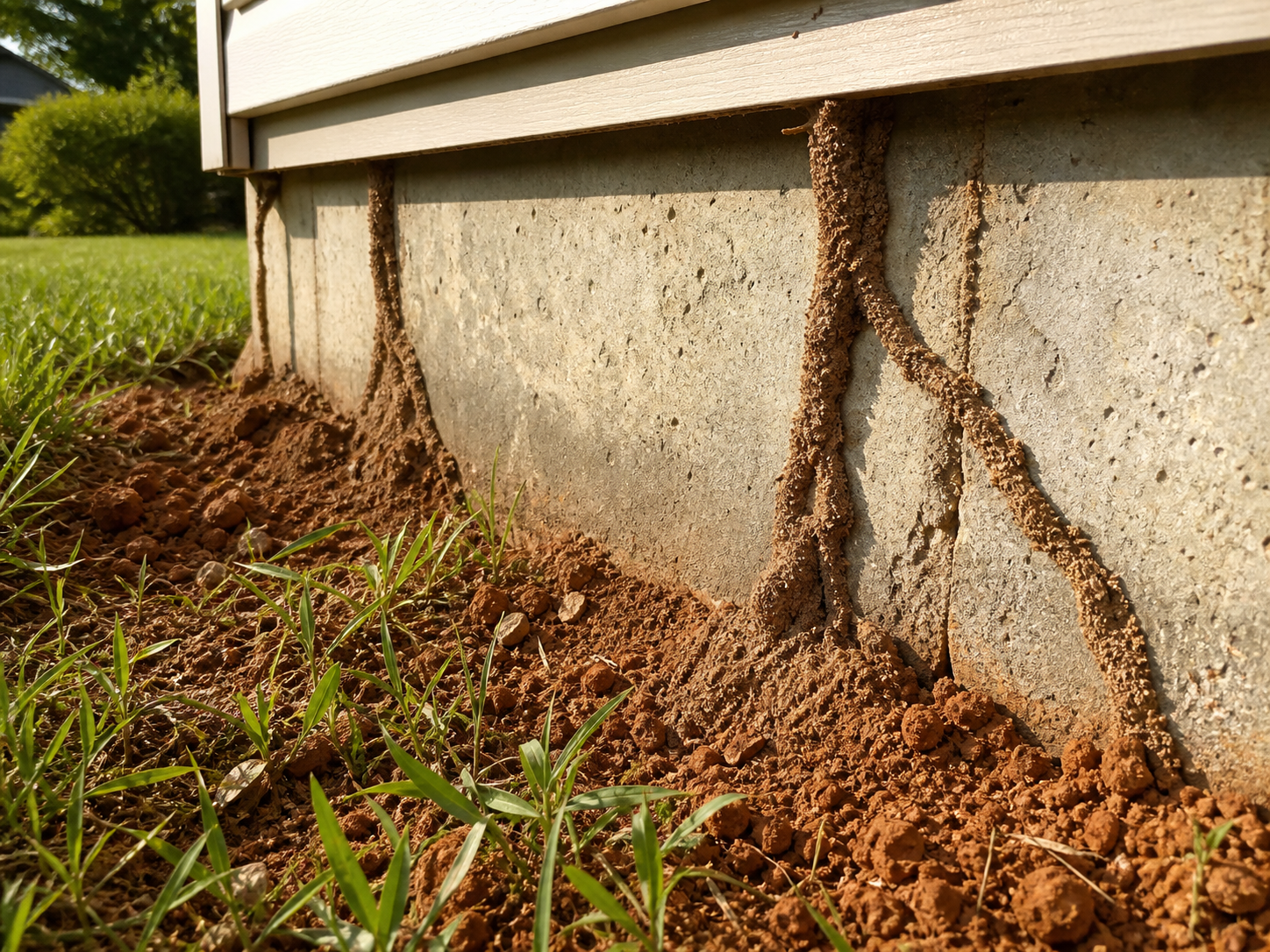
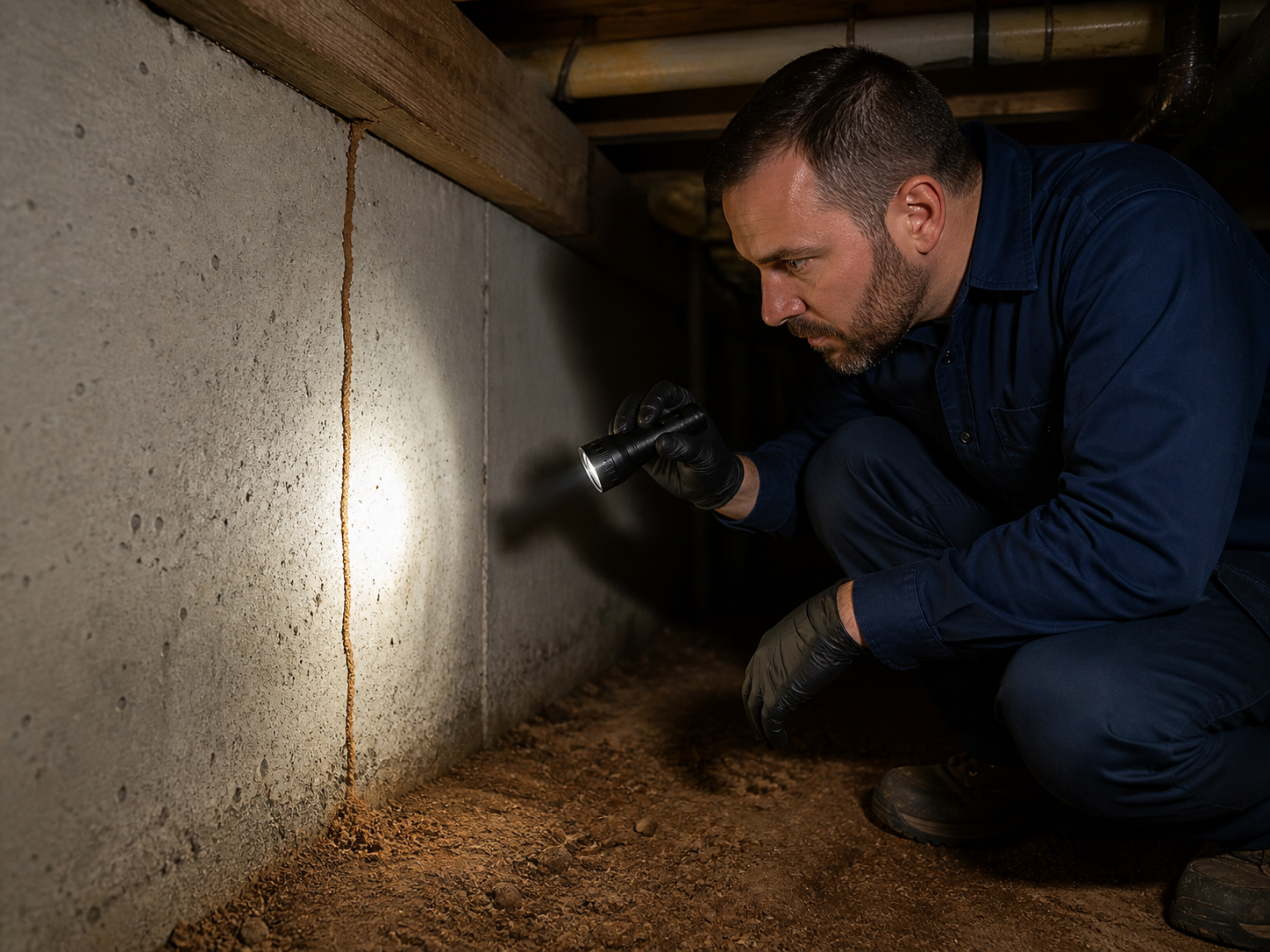
Mud tubes are one of the clearest signs of subterranean termite activity. These are thin, pencil-sized tunnels made of soil, wood particles, and termite saliva. Termites build them to travel safely between the ground and the wood in your home without being exposed to light or dry air.
You will most often find mud tubes along the outside of your foundation, on concrete block walls, inside crawl spaces, or along basement walls. They can also appear on the interior of your home, particularly in areas like utility closets or behind drywall near the floor.
If you find a mud tube, do not just break it open and walk away. Even if you do not see live termites inside, the colony may still be active. A professional inspection is the only way to know for sure whether you have an active infestation.
How Termites Destroy Your Home From the Inside Out
Termites eat wood from the inside out, which is what makes them so dangerous. While the outside of a beam or board may look perfectly normal, the inside can be completely hollow. Structural wood that has been compromised by termites can fail under weight, leading to sagging floors, cracked ceilings, and in severe cases, partial collapse.
Beyond the main structure, termites also damage:
• Wooden furniture and cabinets
• Books, paper, and cardboard boxes in storage
• Hardwood floors and subflooring
• Deck wood and outdoor structures
The average termite repair cost in Georgia can run from $3,000 to over $10,000 depending on the extent of the damage. Catching termites early is the difference between a manageable treatment and a major renovation. If you are a Georgia homeowner and want to find more trusted local resources, the Support Black Owned Georgia directory is a great place to connect with licensed, community-rooted service providers across the state.
What to Do When You Spot the Warning Signs
If you have noticed any of the warning signs listed above, here is what to do right away:
• Do not disturb the area – Avoid breaking open walls or removing mud tubes before a professional has inspected. Disturbing the site can cause the colony to scatter deeper into your home.
• Document what you see – Take photos of mud tubes, damaged wood, or any signs you have found. This helps the technician quickly assess the scope of the problem.
• Call a licensed pest control professional immediately – The faster you act, the less damage the colony will cause.
Iron Grip Exterminators offers professional termite inspections and treatment services throughout Gwinnett County. You can learn more about the company and read customer reviews by visiting their Iron Grip Exterminators SBO profile on Support Black Owned.
How to Prevent Termites Before They Start
The best termite treatment is one you never have to get. Prevention goes a long way, especially in high-risk areas like Gwinnett County. Here are practical steps every homeowner can take:
• Keep wood away from soil – Firewood, lumber, and mulch stacked directly against your foundation give termites an easy entry point. Keep all wood at least 18 inches away from your home.
• Fix moisture problems – Leaky pipes, poor drainage, and humid crawl spaces attract termites. Repair any leaks and make sure water drains away from your foundation.
• Seal cracks in your foundation – Termites can squeeze through gaps as thin as 1/32 of an inch. Seal any visible cracks along your foundation walls.
• Schedule annual termite inspections – A professional inspection each year catches early activity before it becomes a major problem.
Iron Grip Exterminators uses environmentally friendly, low-toxicity products that protect your home without putting your family or pets at risk. Their approach is built around three steps: thorough assessment, precision treatment, and long-term prevention — all designed to give you lasting protection.
Protect Your Home Before Termites Take Control
Termites are patient, quiet, and relentless. But knowing the warning signs gives you the power to stop them early. If you live in Gwinnett County, Lawrenceville, Snellville, or the surrounding areas, do not wait until you see obvious damage. A fast inspection could save your home.
Iron Grip Exterminators is a licensed, insured, Black-owned pest control company with over 20 years of experience protecting homes in the Gwinnett County area. They specialize in termite control, along with treatments for ants, roaches, spiders, mosquitoes, and more. Their business was featured through the SmartBoost editorial program on Support Black Owned, which helps highlight community businesses that deliver real results for their clients.
Call 470-458-2554 today to schedule your inspection and take the first step toward a pest-free home.


Charles Injury Law is a law firm that provides personal injury and…


Visit Black Travel connects travelers with Black-owned businesses,…
We are Black, Proud, and Powerful. 🖤💚
Editorial Note: This article was developed with assistance from AI tools and reviewed, edited and approved by the Support Black Owned Editorial Team. Business information was checked using available sources and information provided by the featured business.